
With nearly three decades in the lubricants industry, Samvar Mavani has led the transformation of a family-run business into a professionally managed organization at the forefront of innovation. From pioneering synthetic oils in Indian cement plants to developing indigenous alternatives for critical steel applications, his journey reflects the power of R&D, resilience and visionary leadership. In this Spotlight interview, he shares insights on industry shifts, sustainability and what it takes to shape India’s lubricants future.
Focus on creating long-term value rather than chasing short-term wins.
Can you share your professional journey and what inspired you to enter the lubricants industry?
I began my professional journey in 1996, shortly after completing my studies in instrumentation engineering and management. At that time, our company was a small, family-run business primarily serving the textile machinery sector. Over the years, we transformed it into a professionally managed organisation, steadily expanding into automotive, oil & gas and other industrial segments.
My entry into the lubricants sector was more by inheritance than design, as I joined the family business soon after completing my studies. However, what began as a responsibility quickly turned into a passion. The industry is highly technical and application-driven, which meant I was constantly challenged to learn and adapt. Each customer requirement brought with it a unique problem to solve whether related to machinery performance, extreme operating conditions or sustainability concerns.
What milestones stand out as turning points in your career?
One of my proudest milestones came in 2006, when we secured our very first order for synthetic oil from a leading cement plant in North India. We supplied a 320 grade synthetic gear oil for a raw mill, replacing the mineral oil that had been in use. It was a breakthrough moment – not only because it marked our entry into synthetic lubricants on a large scale, but also because it gave us the confidence that an Indian manufacturer could successfully deliver solutions that had previously been dominated by international brands.
More recently, I take pride in having developed an Indian alternative to a Japanese grease for a critical application in a steel plant. It was a technically demanding project and its success reaffirmed our ability to innovate and create world-class solutions from within India.
Could you share some recent innovations or projects you’re particularly proud of?
In recent years, I have been particularly proud of our work in developing high performance solutions that have (at times) surpassed the European or Japanese specialty products. A notable example is a grease we formulated as a replacement for a Japanese product used in a highly critical steel plant application. It required significant investment in R&D, extensive testing and close collaboration with the customer’s technical team. The success of this project not only strengthened customer confidence but also demonstrated that indigenous solutions can meet and even surpass demanding global benchmarks.
We have also been working on advancing our testing capabilities by investing in rheometers, tribometers and custom-built rigs. These tools allow us to simulate real-world conditions and accelerate the development of high-performance lubricants. While these projects are less visible to the outside world, they form the backbone of our ability to innovate consistently.
How has the lubricants industry evolved over the past decade?
Over the past decade, the lubricants industry has shifted decisively towards high-performance and speciality products and I believe this trend will only accelerate. Customers are increasingly evaluating lubricants on the basis of total cost of ownership, which means that performance attributes such as extended drain intervals, energy efficiency and reliability will become even more critical.
We are also seeing the gradual adoption of advanced grease thickener technologies such as calcium sulphonate complex and polyurea, which are likely to displace traditional lithium-based products in several demanding applications. Sustainability will play a much larger role in the years ahead – PFAS-free lubricants are already well established for exports to Europe and biodegradable formulations, though currently niche is poised to expand as regulations tighten and awareness grows.
What emerging technologies will shape the next five years in lubricants, greases and industrial fluids?
The next five years will be very exciting for our industry, as several emerging technologies begin to move from discussion to practical adoption. Nano-based lubricants and additives, for example, have long been spoken about but have not yet reached commercial scale. I believe we will start seeing meaningful progress here, with nano-additives helping to enhance load-carrying capacity, reduce friction and improve energy efficiency.
Biodegradable and bio-based lubricants will also gain momentum. Although they will remain a relatively small share of the market initially, growing regulatory pressure and customer demand for sustainable solutions will accelerate their acceptance. Similarly, PFAS-free products, already becoming standard for European exports, will increasingly become the norm across industries.
On the grease side, we can expect a stronger shift towards calcium sulphonate complex and polyurea thickeners, as industries look for higher performance and more robust alternatives to lithium. Alongside these product innovations, digitalisation will also play a key role – condition monitoring, predictive maintenance and smarter application tools will ensure lubricants are not just high-performing, but also used more intelligently.
Sustainability in lubricants will be as much about educating people and improving practices as it will be about chemistry.
How do you see sustainability influencing lubricants in India?
Sustainability is beginning to influence the lubricants industry in India, but I believe its impact will become far more pronounced in the years ahead. In terms of formulation, we are already seeing a gradual move towards PFAS-free products and the early adoption of biodegradable and bio-based alternatives. While these remain niche today, increasing regulatory pressure and customer awareness will ensure they play a larger role going forward.
Usage practices are also evolving. Customers are now placing greater emphasis on lubricants that extend drain intervals, reduce re-lubrication frequency and improve energy efficiency -all of which contribute to lowering the overall environmental footprint.
Perhaps the biggest challenge however, lies in disposal. In India, used lubricants are often handled without adequate knowledge of their environmental impact. Addressing this requires not only stricter regulation but also greater awareness and training at the ground level. In my view, sustainability in lubricants will be as much about educating people and improving practices as it will be about chemistry and product development.
What key challenges do you believe the industry must urgently address?
The industry faces a few pressing challenges that in my view, must be addressed with urgency. The first is disposal and recycling of used lubricants. At present, this is not taken seriously enough in India, with much of the responsibility left to individuals who may not be aware of the environmental consequences. Establishing clear regulations, proper collection systems and greater awareness are vital.
The second challenge lies in application practices. Very often, while lubricant selection is done by technical staff, the actual application is left to personnel with limited training. This can lead to under- or over-lubrication, improper grease dosage and ultimately, equipment failure. Building stronger training programmes and encouraging best practices in application is therefore essential.
Finally, the industry must address the skills and knowledge gap. As machinery becomes more advanced and customers demand higher performance, professionals in this sector need continuous upskilling in both tribology fundamentals and the latest developments in base oils and additives. Without this, the pace of innovation will outstrip the ability of people on the ground to apply it effectively.
Which sectors hold the most growth potential for lubricants in India?
Heavy industry and infrastructure remain particularly strong in India. With continuous investment in construction, steel, cement and power, there is sustained demand for high-performance lubricants capable of handling demanding operating conditions.
The automotive sector has already witnessed considerable growth, especially with the shift towards more advanced engines and the gradual rise of electric vehicles. While the pace may stabilise, it will continue to be a large and important segment for lubricants.
Looking ahead, I see aerospace and defence as a sector with tremendous opportunity. As India strengthens its position in global aerospace manufacturing and defence capability, demand for specialised lubricants with stringent performance requirements will rise significantly.
In general manufacturing, the push for efficiency, automation and export competitiveness is also creating opportunities for speciality products such as long-life greases, high-temperature oils and clean lubricants for precision applications.
What advice would you give manufacturers looking to expand in India?
My single piece of advice would be: focus on building a strong distribution network while tailoring products to the realities of the Indian market. India is not one uniform market but rather a collection of very diverse regions, each with its own industrial clusters, customer expectations and operating conditions. A lubricant that works in one part of the country may not be the best fit elsewhere.
Manufacturers who succeed in India are those who combine performance with practicality -products that are neither over-engineered nor under-engineered, but optimised for local requirements. Alongside this, having reliable distribution partners who can reach customers quickly and provide technical support is absolutely critical.
How important are events like the Lubricant India Expo & Summit?
Events such as the Lubricant India Expo & Summit are extremely important because they provide the industry with a dedicated platform that has long been missing in India. Other sectors from automotive to construction have well-established expos, but lubricants until recently lacked a forum where the entire value chain could come together under one roof. Lubricant India expo and summit allow manufacturers to showcase innovations, customers to discover solutions tailored to their needs and researchers to share new developments. Equally, they create opportunities for networking, collaboration and knowledge exchange, which are vital in a sector that is both highly technical and rapidly evolving.
For me, the real value lies in the focus: visitors who attend are specifically looking for lubricant-related solutions, which makes the interactions meaningful and productive. Over time, Lubricant India Expo & Summit will play a crucial role in shaping industry standards, accelerating adoption of new technologies and highlighting the contribution of lubricants to India’s industrial growth.
India rewards those who respect its diversity, listen closely to customers and stay flexible in their approach.
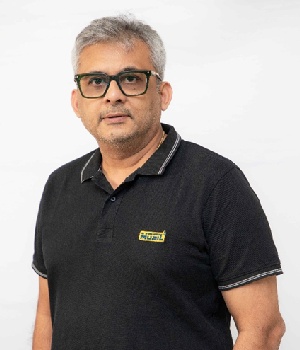 Samvar Mavani is Director of MOSIL Lubricants, with over 25 years of experience in developing high-performance lubricants and specialty fluids across industries. A strong advocate of R&D, sustainability and entrepreneurship, he has pioneered indigenous alternatives to global products while mentoring the next generation of professionals. He’s hobbies includes reading, particularly world history and biographies.