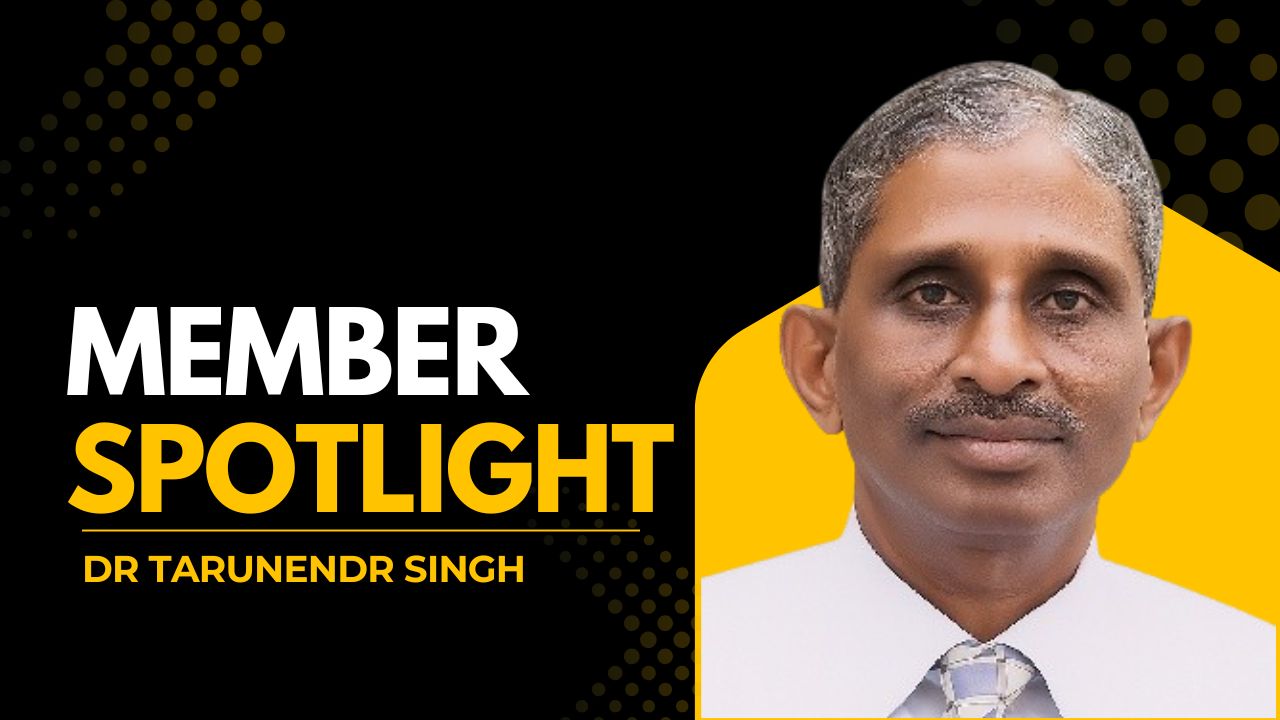
With over three decades of pioneering work in lubricants and tribology, Dr. T Singh has been at the forefront of innovation from developing high-performance greases for critical industries to shaping national and international standards. Dr. Singh combines deep technical expertise with a vision for sustainability and digital transformation. In this candid conversation, he reflects on his journey, the evolving role of lubricants in India’s growth story and his advice for companies looking to thrive in a changing industrial landscape.
Localize your solutions- not just your products
Can you share your professional journey and current role in the lubricants industry?
I hold a Ph.D. in Extreme Pressure Lubricant Additives from IIT (BHU), Varanasi and an MBA in Marketing. My journey began in 1991 at Balmer Lawrie’s R&D Centre and since then I’ve worked with HPCL and BPCL across multiple R&D and leadership roles, ultimately serving as General Manager R&D, BPCL. Over the years, I’ve published over 100 papers, contributed to the development and commercialization of a wide range of greases and specialty lubricants and built strong expertise in product development, quality assurance and technical services.
Currently, I am Director of Business Development at Siddharth Grease & Lubes Pvt. Ltd., where I lead technical service initiatives and ensure coordination between R&D and marketing teams. I also serve as Senior Vice President of NLGI India Chapter and Joint Secretary of the Tribology Society of India and have been honoured with both Lifetime Achievement and Long Service Awards from NLGI India.
What inspired you to choose this field?
After completing my postgraduate studies, I pursued my Ph.D. on extreme pressure lubricant additives at IIT BHU. This research naturally led me into the lubricants industry, where I have now amassed over 35 years of experience. The combination of chemistry, engineering and real-world applications continues to inspire me.
What are some of your proudest milestones?
As an R&D scientist, I’ve had the privilege of leading the development of high-performance greases for critical industrial applications – from sugar mill machinery to LPG conveyor systems and steel plant operations. These innovations not only met demanding performance benchmarks but also contributed to sustainability and energy efficiency.
Currently, I also serve as Convener of the Grease Committee at BIS, where I lead the development of Indian grease standards and contribute to international specifications like ISO 2137. Receiving the 2024 NLGI Golden Grease Gun Award from NLGI USA has been another highlight of my career.
How has the lubricants industry changed in the last decade?
The industry has undergone a remarkable transformation. Lubricants are no longer just about protecting engines – they are now technology-driven, environmentally conscious and data-informed. Environmental regulations, consumer expectations and industrial innovation have all accelerated this change. Today, companies those invest in sustainability, digitalization and customer-centric solutions are defining the future of lubrication.
In your view, what technologies and innovations will shape the next 5 years?
I see a convergence of material science, digital tools and sustainability principles. Nanotechnology, advanced gels and bio-derived materials will change formulations. IoT and AI will make lubrication smarter with predictive monitoring. Circular systems, recycling and bio-based lubricants will become increasingly central. Across automotive, industrial and renewable energy sectors, the next wave of lubricants will combine performance with responsibility.
“The winners in the next five years will be those who innovate sustainably, digitize smartly and build resilient supply chains.”
How is sustainability influencing India’s lubricant practices?
Sustainability is shaping the entire lifecycle from green formulations to digital usage tracking and from regulatory-backed recycling to circularity. Progress is visible, but true success will require stronger infrastructure, wider awareness and formalized collection systems. The biggest shift is the industry’s realization that sustainability is not optional, it’s now integral to competitiveness.
What are the urgent key challenges for the industry to address?
The lubricants industry faces a range of challenges that must be addressed to remain competitive, sustainable and technologically relevant -especially in emerging markets like India, as well as globally. The winners will be those who:
- Innovation with sustainability at the core.
- Smart digitalization without overcomplicating processes.
- Building resilient supply chains, especially given raw material shortage.
- Educating the market on responsible use and disposal of lubricants.
- Collaboration between policymakers, OEMs, manufacturers, recyclers and end-users is essential.
How do you view India’s lubricant market growth in a global context?
India is one of the fastest-growing lubricant markets in the world, driven by a rising automotive sector, infrastructure development, and Make-in-India policies. Nearly 60% of demand comes from automotive and construction, while industrial lubricants are expanding rapidly. Compared to global patterns, India’s growth is unique in its diversity of applications and its scale.
Re-refined oils are becoming increasingly important as India moves towards circularity and extended producer responsibility (EPR). While collection infrastructure and quality control need strengthening, the potential is huge. Policies and industry initiatives are pushing for recycling and re-refined base oils are finding acceptance in industrial applications.
Are bio-based or environmentally friendly lubricants viable at scale?
Bio-based and environmentally friendly lubricants are gaining traction, especially in industries sensitive to environmental impact. While they are not yet fully viable as large-scale alternatives in every sector, the direction is clear. With improvements in performance, cost and availability, bio-based lubricants will become mainstream. The real shift will come when sustainability is not seen as an add-on but an integral part of product design and lifecycle.
What challenges are clients bringing to you most often and how does this shape the industry’s skill needs?
Clients today are asking about sustainability compliance, digitalization of lubrication practices and solutions for EVs and renewable energy applications. They want guidance not just on products but on systems and long-term efficiency.
For professionals, this means that multidisciplinary skills are more critical than ever -combining tribology fundamentals with digital know-how, environmental awareness and supply chain understanding. The lubricant industry is no longer only about chemistry, it is about connecting science, technology and sustainability.
How important are training, certification and collaboration in shaping the future?
Training and certification are absolutely vital. A well-trained workforce ensures consistent quality, safety and competitiveness. Skill-building programs also attract young talent which the industry badly needs.
At the same time, true progress will only come through collaboration between industry, academia and policymakers. Each has a role: industry brings practical challenges; academia brings research depth and policymakers bring frameworks and incentives. Together, they can accelerate innovation and make India a global leader in lubricants and tribology.
What advice would you give manufacturers and young professionals looking to expand in India?
My advice to businesses: “Localize your solutions — not just your products.” India is vast and diverse and success comes from tailoring solutions to the unique requirements of different regions and industries.
To professionals: “Build relationships, not just networks. Stay curious, stay humble, and keep learning.” This industry is vast and the most rewarding careers are built on curiosity, collaboration and a sense of purpose.
Events like the Lubricant India Expo & Summit are vital because they bring together industry, academia and policymakers. They showcase innovation, enable knowledge sharing, spark collaborations and provide direct dialogue with regulators. Most importantly, they give the lubricants industry its own dedicated platform- something long overdue.
“Build relationships, not just networks. Stay curious, stay humble, and keep learning.”
About
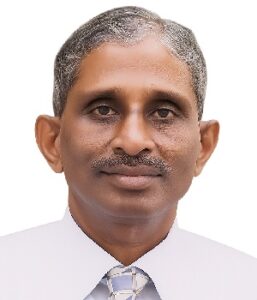 Dr. T Singh is Director – Business Development at Siddharth Grease & Lubes Pvt. Ltd., with over 35 years of experience in R&D, product development, and technical services in lubricants. He firmly believes in building long-term professional and personal relationships that create meaningful value and stand the test of time. He has authored over 100 research papers, contributed to national and international standards and received numerous awards including the NLGI Golden Grease Gun Award (USA) in 2024.