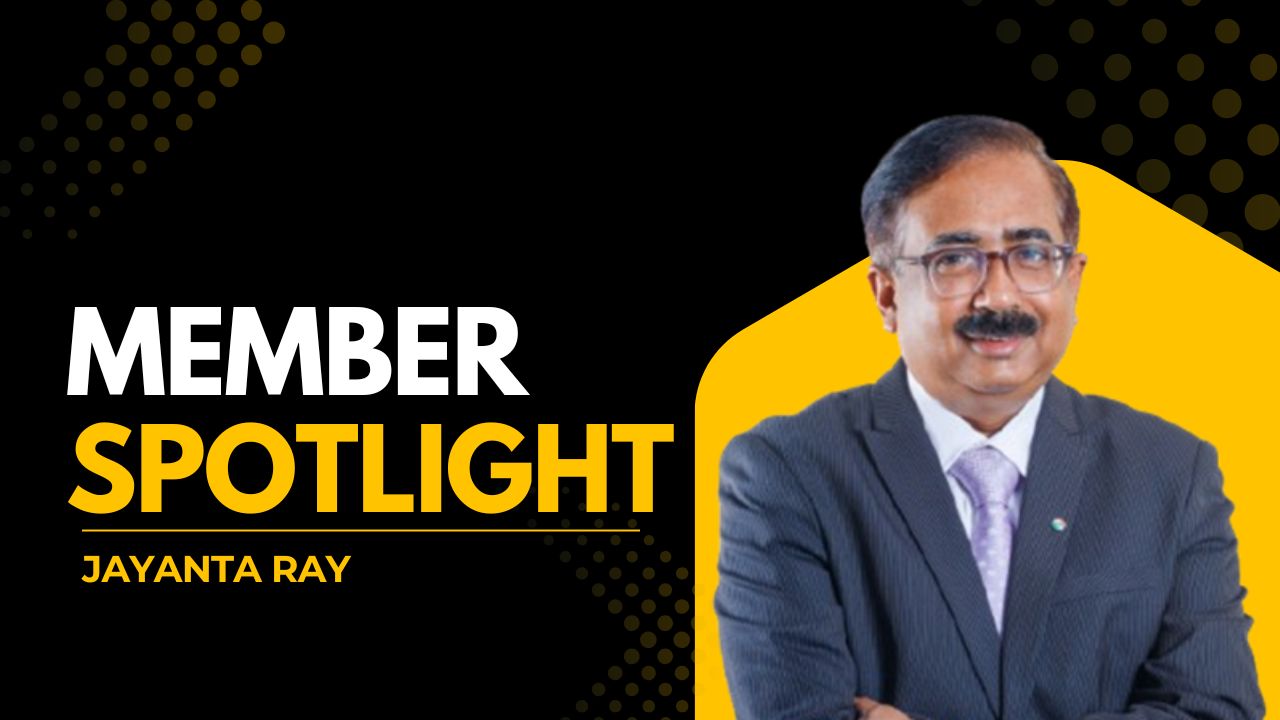
A seasoned industry leader reflects on OEM collaboration, emission-driven innovation and the evolving role of lubricants in India’s growth story. “Lubricants today must carry more load, run cleaner, and last longer — all at the same time.” With nearly three decades in the lubricants industry, including 19 years at Shell India and 9 years with GS Caltex, Jayanta Ray has worked across passenger vehicles, commercial vehicles, off-highway OEMs and industrial lubricants. His career spans global OEM engagements, fuel-economy initiatives and cross-border collaboration. In this conversation, he shares how emission norms, sustainability and technology are reshaping lubricant formulation and industry priorities in India. Could you share your professional journey and current focus in the lubricants industry? My journey spans close to 28 years in the lubricants industry, with 19 years at Shell India and the last 9 years with GS Caltex. I’ve worked across passenger cars, commercial vehicles, off-highway OEMs, and industrial lubricants. At Shell, exposure to global R&D centres and strong leadership helped shape my approach, while at GS Caltex I’ve been deeply involved in expanding OEM engagement and managing complex projects across India and other markets. What inspired you to work in this sector and stay committed to it? What began as a sudden recruitment into Shell India’s industrial lubricants division gradually turned into a passion. Working with global and local leaders, receiving training across Shell R&Ds, and engaging in OEM rollout projects gave me a deep appreciation of how lubricants enable performance, efficiency and reliability. Managing virtual global teams further strengthened my interest in solving complex, real-world challenges. What career milestones are you most proud of? Being part of Shell Global Solutions, managing global key accounts and contributing to strategic task forces at GS Caltex to expand business in India and overseas stand out strongly. I was also nominated to coach the China lubricants team for GS Caltex’s B2B business, which was a rewarding opportunity to share knowledge and build capabilities across markets. How has the lubricants industry changed over the past decade? The biggest shifts have been driven by stricter emission norms (from BS-III to BS-VII) and major hardware changes like smaller sumps and compact engine designs. Lubricants today must deliver higher load-carrying capacity while remaining more robust, efficient and sustainable. This has fundamentally changed how formulations are designed and validated. What technologies will shape the next five years of lubricants and fluids? The move toward synthetic lubricants with longer drain intervals and superior performance will accelerate. Sustainability is pushing innovation toward lower carbon footprints and the use of re-refined base oils (RRBO) will grow to support a circular economy. Consumers will increasingly value efficiency, durability and environmental responsibility together. How do you see sustainability influencing formulation, usage and disposal in India? Waste-oil collection remains a major challenge, but the ecosystem is evolving. CPCB, refiners, lubricant manufacturers, OEMs and BIS have come together to promote RRBO adoption. As a result, we’ll soon see new formulations featuring RRBO positioned as green lubricants, marking a significant shift toward sustainable practices in India. Which sectors show the strongest growth potential and what are customers asking for today? With two-wheelers and passenger cars gradually moving toward EVs, growth in automotive will be driven largely by tractors and commercial vehicles. Industrial lubricants are also expected to grow in line with India’s GDP expansion. Customers today are highly focused on reliability, productivity and total cost of ownership, especially in an increasingly competitive market. “Sustainability is no longer optional — it is shaping how lubricants are designed, used and recovered.” What skills will be most critical for future professionals in this sector? Strong R&D capabilities for high-end, sustainable lubricants will attract and retain top talent. As AI enters the lubricants space, sales and technical teams must gradually re-skill to work with data-driven tools, advanced diagnostics and evolving customer expectations. Your advice for companies expanding in India and the role of collaboration? Manufacturers must identify a clear niche — without differentiation, competition becomes unsustainable. Collaboration between industry, academia and policymakers is essential. Forums led by PSUs and professional bodies such as ICIS, Petrosil and Rosefield are already doing meaningful work in encouraging joint research, knowledge exchange and innovation. Why are platforms like the Lubricant India Expo & Summit important? Such platforms bring experts together to share experience and knowledge, enriching the industry as a whole. They also help prepare the next generation to enter the lubricants sector with clarity, confidence and technical understanding. “It’s not what happens to you, but how you react to it that matters.” Jayanta Ray is a senior lubricant professional with nearly 28 years of industry experience, including long tenures at Shell India and GS Caltex. He has worked extensively with automotive and industrial OEMs, global key accounts and cross-border teams, contributing to fuel-economy projects, OEM approvals, and sustainable lubricant strategies. He is an avid reader and believes continuous learning is essential for navigating change.

From Lubricant Manufacturer to Performance Partner: Redefining Value in India’s Specialty Lubrication Space
How the third generation of Molygraph Lubricants is building innovation, global partnerships and purpose-driven industry impact. “Small, consistent improvements compound into extraordinary results.” As a third-generation industry leader, Samarth Shah brings a blend of legacy and forward-thinking leadership to Molygraph Lubricants (Anand Engineers Pvt. Ltd.). Over the past decade, he has led global expansion across Southeast Asia, Australia, the Middle East, and Africa, while transforming the company from a traditional manufacturer into a technology-focused performance solutions provider. In this conversation, he shares his views on industry evolution, emerging technologies, and the mindset required to build meaningful change in India’s lubricants ecosystem. You represent a legacy organisation — how would you describe your journey and role today? I currently serve as Director at Molygraph Lubricants, a third-generation family-managed business committed to building performance-driven specialty lubrication solutions. Over the past decade, I’ve focused on expanding Molygraph’s global footprint, modernizing the product portfolio and building long-term partnerships across Southeast Asia, Australia, the Middle East and Africa. My core work now revolves around international business development and brand strategy, steering the company through its next phase of innovation and scale. What inspired you to pursue a career in the lubricants sector? Lubricants are the invisible force that keeps the world running—from manufacturing to mobility. The ability to solve real industrial problems and make machinery more reliable has always fascinated me. Carrying forward a 30-year legacy is both a privilege and a responsibility, and that remains a major source of motivation. What milestone stands out as the most defining in your career so far? Representing India on international platforms, building strategic collaborations with global partners and leading Molygraph’s transformation from a traditional lubricant manufacturer to a technology-focused performance solutions brand have been among the most fulfilling milestones. What recent innovations or product breakthroughs are you most proud of? Some exciting developments include our new-generation open-gear lubricants, advancements in dampening greases for automotive and hardware applications and a high-performance metalworking coolant range designed for advanced manufacturing environments. How has the lubricants industry evolved in the last decade? We’ve moved from commodity lubrication to application-engineered solutions. Market expectations have shifted toward synthetic technologies, sustainability-driven formulation and energy savings. Today, conversations are less about price per litre and more about reliability, lifecycle performance and operating efficiency. Which technologies will define the next 5 years? The future will be shaped by: • Smart & sensor-based lubrication systems powered by predictive analytics • High-performance synthetic base oils and PFPE-based fluids • Immersion cooling and thermal-management fluids • Biodegradable lubricants designed for circularity These innovations will make lubrication far more intelligent, efficient and sustainable. How do you see sustainability influencing behaviour, formulation and end-use in India? Sustainability will reshape formulation choices, drain intervals, consumption optimization, and end-of-life practices. Customers will increasingly evaluate lubricants based on total environmental impact – not just procurement price. Carbon footprint, recyclability and energy savings will become key decision drivers. “Customers are now looking for reliability, efficiency, and lifecycle value—not just a cheaper lubricant.” Which sectors and applications are showing the strongest growth? India’s growth is driven by steel, cement, mining, renewable energy, EV components and data-center cooling applications. Demand for cutting fluids and specialty lubricants is accelerating thanks to automation, CNC machining and precision engineering aligned with India’s manufacturing ambitions. Customers are increasingly looking for: 1. Longer sump life, cleaner machines and lower top-ups 2. Energy-efficient and high-performance products that can handle higher speeds, tighter tolerances and tougher materials What skills will the next generation of lubrication professionals need? The most essential capabilities will be application engineering, strong tribology fundamentals, data-driven lubrication management and customer-centric problem solving. The industry needs specialists – not generalists. Certification and structured training will play a critical role in elevating technical credibility. What strategic advice would you give companies expanding in India? India is a relationship- and performance-driven market. To succeed, manufacturers must invest in application engineering, training and service – not just commercial penetration. Customers want technical partners, not suppliers. Why do platforms like the Lubricant India Expo & Summit matter? Events like these connect the full value chain – formulators, OEMs, technology providers, end-users and policymakers. They accelerate collaboration, knowledge sharing and innovation adoption that would otherwise take years. When industry, academia and policymakers work together, it creates an ecosystem where research becomes practical, innovation becomes scalable and regulation becomes enabling rather than restrictive. Samarth Shah is Director of Molygraph Lubricants. His work focuses on transforming lubrication from a commodity into a performance-led, sustainability-aligned value enabler for modern industry. Personal growth, fitness and community impact are core to him. He enjoys sports, outdoor challenges, scuba diving, surfing, skiing and movement-based endurance activities. Through their CSR efforts, his organisation supports child development, education and women empowerment, especially in the Palghar region, where many of their workforce live and work.

Engineering Efficiency: The Science and Strategy Behind Smart Lubrication
PETRONAS Lubricants Technical Head – shares how performance, sustainability and digitalisation are redefining lubrication for the next decade. With nearly two decades in the lubricants sector, Vaibhav Verma has worked with global majors including ExxonMobil, Shell and PETRONAS. Currently leading Technical Service at PETRONAS Lubricants, he bridges R&D, field support and customer solutions driving new product development and performance excellence. In this conversation, he discusses industry transformation, emerging technologies and the skills that will define the next generation of lubricant professionals. “Lubricants sit at the intersection of science, engineering and performance — and that blend of technology and impact continues to fascinate me.” Tell us about your journey and current role in the lubricants industry? I have over 19 years of experience in industry, with the past 16 yrs focused specifically on lubrication science and technical support. At PETRONAS Lubricants, I lead the technical service function, supporting partners and customers with advanced solutions and new product development. Earlier, I worked with ExxonMobil and Shell in technical and sales roles that gave me a 360-degree view of how customer needs and market strategy intersect. What inspired you to pursue this field? Lubricants combine science and real-world impact. Every formulation has a purpose – enhancing mobility, efficiency or sustainability. The chance to solve OEM and customer challenges and see performance translate into results is deeply motivating. It’s a sector where you learn something new every day. Which career milestones make you most proud? Securing multiple OEM approvals that strengthened product credibility and reach has been a key highlight. Equally rewarding were leading initiatives that reduced cost-to-serve while maintaining performance excellence proving that innovation and efficiency can coexist. How has the lubricants industry changed in the last decade? The sector has moved from a product-centric to solution-centric approach. There’s greater focus on ultra-low viscosity oils for energy efficiency, sustainability through re-refined base oils (RRBO) and digital engagement with customers. OEM collaborations are more strategic than ever and data-driven maintenance is reshaping how lubricants deliver value. Which technologies will shape the next five years of lubrication? Electrification and hybrid powertrains will create new fluid requirements. We’ll see advances in EV fluids, low-viscosity formulations and smart lubricants with sensor-based condition monitoring. AI-driven predictive maintenance will help customers shift from reactive to proactive asset management. How is sustainability influencing formulation and use in India? Sustainability is now central to every discussion from renewable base oils and biodegradable packages to circular packaging and EV integration. India is seeing wider adoption of energy-efficient lubricants, longer drain intervals and RRBO usage aligned with EPR guidelines. Quality of feedstock remains a challenge, but momentum is strong and the direction is clear. What sectors and applications show the strongest growth? While automotive remains core, the fastest growth is coming from industrial, construction and mining segments. With India’s infrastructure and manufacturing boom, demand for metalworking fluids, hydraulic oils and specialty lubricants is rising steadily. Customers increasingly seek cleaner, longer-life fluids that improve safety and efficiency in automated plants. What are the key challenges the industry must address? Balancing sustainability with cost pressures, aligning supply chains with new regulations and bridging the skill gap in formulation and digital competence are critical. We need more formulation flexibility and greater reliance on analytical data to respond agilely to market and environmental changes. What skills will be most critical for future professionals? Tomorrow’s lubricant specialists must blend technical depth with digital fluency. Understanding tribology and chemistry is just the start data analytics, AI and condition monitoring will define the next skill curve. Equally important are soft skills – customer orientation and cross-functional collaboration to turn technical insights into practical solutions. How important is training and certification in maintaining competitiveness? Extremely important. Structured training builds confidence and consistency, bridging the gap between global standards and local practice. As technologies evolve, continuous learning will be the cornerstone of India’s competitiveness in the global lubricant market. “The industry has evolved from selling products to delivering solutions and data-driven innovation is now the lubricant of progress” Why are platforms like the Lubricant India Expo & Summit important? These platforms enable knowledge sharing and collaboration across the value chain from formulators to OEMs. They foster networking, technology transfer and policy dialogue that push the industry toward a smarter and more sustainable future. What motivates you outside of work? Continuous self-improvement whether through reading, fitness or playing the guitar that keeps me balanced and creative. It helps me return to work with clarity and renewed focus. “Excellence is not a skill — it’s an attitude.” Vaibhav Verma is Head – Technical Service at PETRONAS Lubricants, leading technical support functions across India. With 19 years of experience at PETRONAS, ExxonMobil and Shell, he specializes in formulation science, sustainability strategy and customer-centric innovation. He is passionate about mentoring young engineers and advancing India’s technical capability in smart lubrication.

Driving Lubricant Innovation Across Continents: A Journey of Leadership, Partnerships, and Purpose
With over three decades in global lubricants, base oils and additives, Bhupinder Singh shares his lessons on building brands, advancing sustainability and why India’s next phase of growth must focus on quality, talent, and collaboration. With a career spanning more than thirty years across Castrol (BP), BAPCO, Duckhams Oils, and BluechemGROUP Germany, Bhupinder Singh has been at the forefront of international lubricant expansion, OEM partnerships and new blending ventures across the Middle East, Africa and Asia. As Global Director – Lubricants & Base Oils Business Development at BluechemGROUP, Germany and head of Venol International FZE, he brings a unique perspective on building businesses that combine technology, trust and long-term value. “Build relationships before business, and excellence will follow naturally.” You’ve had a remarkable global career. How would you describe your journey so far? I’ve spent over three decades in the lubricants, base oils, and additives business, holding leadership roles with global energy brands like Castrol (BP), BAPCO and Duckhams Oils. Today, I lead BluechemGROUP’s lubricants and base oils business from Dubai, overseeing development across the Middle East, Africa, CIS and Asia. My focus is on strategic partnerships, licensing programs, OEM collaborations and establishing new blending plants and distribution networks in emerging markets. What inspired you to work in this sector? Lubricants are truly the lifeblood of every machine—from mobility to manufacturing. My background in chemistry and fascination with how performance and protection are engineered drew me in. What keeps me inspired is that this industry sits at the intersection of technology, sustainability, and human connection—and there’s always something new to learn. What milestone stands out most in your career? Building a lubricant brand from scratch – right from formulation and packaging design to market launch and distribution has been deeply fulfilling. Expanding that network across 12 countries in the Middle East and Africa, and successfully relaunching Duckhams in these regions, were major milestones. Equally rewarding has been developing BluechemGROUP’s international lubricants business and helping regional partners evolve into strong, independent distributors. How has the lubricants industry changed in the last decade? The transformation has been profound. Efficiency, digitalisation and sustainability are now at the core of every conversation. We’ve seen the rise of Group II/III base oils, tighter OEM specifications and growing demand for AI-driven maintenance and condition monitoring. Electric and hybrid drivetrains have redefined lubricant chemistry, while sustainability has shifted from a corporate goal to an operational necessity. Which technologies will shape the next five years? We’re entering an exciting phase driven by e-fluids for EVs, bio-based lubricants, nanotechnology-based additives and AI-enabled predictive maintenance. The integration of IoT in machinery will fundamentally change how lubricants are monitored, serviced and optimized enabling real-time performance feedback and more efficient asset management. What are the most pressing challenges and opportunities for the industry today? We urgently need consistent quality standards, stronger used-oil recycling and re-refining infrastructure, and better skills in formulation, tribology and automation. Raw material volatility and price pressure remain persistent challenges. But the opportunity lies in innovation and collaboration particularly in industrial automation, renewable energy and precision manufacturing, where lubrication performance directly drives efficiency and uptime. “Efficiency, digitalisation and sustainability are no longer trends – they’re the foundation of the lubricant industry’s evolution.” How do you see sustainability and bio-based lubricants evolving in India? Sustainability will increasingly define formulation strategies—reducing sulphur, phosphorus and ash, while promoting biodegradable base oils and longer drain intervals. Bio-lubricants are already viable in industrial, marine and agricultural use cases, but large-scale adoption will depend on policy support and base stock availability. India is moving rapidly toward ESG-aligned practices and I believe we’ll see mainstream adoption of bio-lubes within the next 5–7 years. Which sectors show the most growth and what are clients asking you about today? The automotive sector remains the largest consumer, but we’re seeing stronger growth from industrial, construction, mining and marine applications. With India’s infrastructure and manufacturing boom, metalworking fluids, hydraulic oils and transformer oils are gaining traction. The ‘Make in India’ initiative and rising automation are also driving demand for cutting fluids, coolants, and specialty lubricants especially for electric, hybrid and precision manufacturing. Clients today are focused on licensing opportunities, automation, base oil sourcing and building OEM-grade portfolios for export. There’s also significant interest in cost optimisation, formulation approvals and expanding access to African and Middle Eastern markets. What skills and training are most critical for the next generation of professionals? A strong foundation in tribology, formulation chemistry, and digital literacy is non-negotiable. Future leaders must understand AI, IoT and data analytics for predictive maintenance, along with sustainability and ESG frameworks. Structured certification and hands-on lab training will bridge the gap between global standards and local practice programs by NLGI India, SAE and ICIS are already leading the way. What’s your advice for lubricant manufacturers expanding in India and how can collaboration accelerate progress? My advice is simple: focus on localisation with innovation. Build blending capacity, partner with OEMs and align with national sustainability goals. India rewards long-term commitment and technical trust, not short-term pricing. Collaboration between industry, academia and policymakers can fast-track this transformation joint research hubs, formulation testing and green certification programs are the way forward. Why are platforms like the Lubricant India Expo & Summit important? Events like this bring OEMs, formulators, additive suppliers and policymakers together to align innovation with policy and business opportunity. They help build partnerships, foster knowledge-sharing and ensure that India’s lubricant ecosystem grows in step with global standards. “Lubricants may be technical, but success in this business is still about people and partnerships.” Bhupinder Singh with more than 30 years of leadership experience across Castrol (BP), BAPCO, Duckhams, and BluechemGROUP, he has led international business expansions, OEM collaborations, and blending plant projects across the Middle East, Africa, and Asia. A passionate advocate for education and youth empowerment, he also supports community initiatives through the Kalgidhar Trust and Akal Academies in India.

From Distribution to Differentiation: Building Value in India’s Lubricants Market
How a product- and solution-led approach is reshaping channels, sustainability and technical capability across India’s lubricant ecosystem. With more than two decades in the lubricants and energy business, Mr. Deep Malhotra, CEO of Enso Oils & Lubricants, has led transformations across sales, marketing and technical functions at global majors and regional businesses. At Enso he drives strategy for India and Southeast Asia expanding product portfolios, building R&D partnerships and moving the company from distribution-led operations to a product- and solution-led organisation. In this conversation he outlines market shifts, the technology and skills that will matter next and the role of events and collaboration in scaling sustainable change. “The biggest shift has been from selling commodities in cans to selling performance and reliability.” Could you briefly describe your professional journey and current role? I’ve spent over two decades in the lubricants and energy business, working across sales, marketing and technical roles with companies like Shell and GS Caltex before taking on my current role as CEO at Enso Oils & Lubricants. At Enso, I lead our strategy for India and Southeast Asia expanding our product portfolio, driving R&D partnerships and building presence across industrial, automotive and marine segments. What inspired you to work in this sector? It was the amalgamation of engineering, chemistry and commerce that fascinated me. Lubricants may seem small in any machine, but they make a huge difference in performance and reliability. The balance of science, business and the tangible impact on efficiency and sustainability keeps me motivated and focused on creating measurable value. What milestone or projects are you most proud of? Transforming a traditional distribution-driven business into a product- and solution-led organisation is my proudest milestone. We blended conventional market practices with digital platforms and new distribution models, which strengthened brand presence and delivered measurable returns for channel partners, shifting the mindset from transactional selling to partnership-driven, sustainable growth for both the stakeholders. What major changes have you seen in the industry and which technologies will shape the next five years? The biggest shift has been from selling commodities in cans to selling performance and reliability customers now want data-backed value like longer drain intervals and energy savings. Going forward, predictive analytics from sensors, AI-led formulations, advanced synthetic and bio-based base oils, and circular-economy innovations like re-refining will be game-changers. The convergence of data, materials science and sustainability will redefine what a lubricant company looks like. How is sustainability influencing formulations, usage and the viability of bio-based lubricants in India? Sustainability is no longer a buzzword – it’s a business necessity. Customers demand longer drain intervals, lower carbon footprints and responsible disposal practices. We’ll see more re-refined base oils and take-back programs. Bio-based lubricants are gaining ground in marine, hydraulic and outdoor machinery, but for heavy-duty extreme environments, further technological improvements and cost parity are still needed. What are the most urgent challenges the industry must address, and what are clients asking you about now? Two critical issues stand out: used-oil collection & re-refining infrastructure and talent development. Clients most frequently ask how to extend drain intervals safely, measure total cost of ownership and integrate digital monitoring into maintenance systems. There’s also strong interest in ESG initiatives – re-refining, carbon reduction and greener alternatives but these needs must be balanced with cost and availability of raw materials. We need more technically skilled people with a passion to contribute not only in labs but on the ground as well. The key word is “Solution Oriented Approach”. Which sectors show the strongest growth potential, and how will specialty fluids evolve? Automotive – especially commercial vehicles and organised workshops remains robust. Rapid growth is expected from manufacturing, mining, construction and renewables such as wind energy, which demand high-performance, reliable lubrication. Demand for cutting fluids, coolants and specialty lubricants is rising as manufacturing becomes more precise and export-oriented, precision-engineered fluids are now critical to improving quality and reducing downtime. What skills will matter most in the coming years, and how important is training/certification? Beyond technical lubricant knowledge, the next generation needs data interpretation, sustainability awareness and technical sales skills. Training and certification standardize knowledge and build customer confidence, they help teams sell value, not just volume. In short, solution-oriented professionals who combine technical ability with customer empathy will lead the market. Your strategic advice for companies expanding in India and why industry–academia–policy collaboration matters? Invest in technical support and deliver value for money. Indian customers value relationships and outcomes, help them improve reliability and reduce costs and you’ll earn loyalty. Collaboration is Key: industry and academia can co-develop technologies and talent, while policymakers can enable re-refining, R&D incentives and sustainability programs. When these three align, innovation accelerates and India can move from follower to leader. Why are events such as Lubricant India Expo & Summit important for the industry? They’re invaluable. These events bring the OEMs, formulators, distributors and regulators on one platform. It’s where innovation meets practical challenges and partnerships are born. Also, it gives a clear pulse of where the industry is headed. We need more such platforms to put India on the world map. “A dream written down with a date becomes a goal. A goal broken into steps becomes a plan. A plan backed by actions makes your dream come true.” Mr. Deep Malhotra is CEO of Enso Oils & Lubricants and a family man. After a day’s work taking an evening walk with his wife while discussing their perspectives on issues at work, debating with his kids on trending topics enlighten him up. His work centres on innovation, sustainability, digital adoption and capability building across the lubricant value chain.

From Europe to India: Building Sustainable R&D for the Next Generation of Lubricants
With a tri-national Ph.D. and two decades of global experience, Dr. Ravi Bactavatchalou reflects on innovation, sustainability and why India must think beyond lubricants. “My hardware is Indian, my software European – French mother tongue, German mindset and Italian heart.” After spending 20 years in France and 16 years in Germany, Dr. Ravi Bactavatchalou relocated to India in 2025 to lead R&D at Klüber Lubrication India Pvt. Ltd. With over 15 years of experience in sealing, lubrication, tribology and material sciences, he has pioneered the integration of atomistic simulations and customer-driven innovation in lubricant development. In this conversation, he shares his global insights, India-specific challenges and his vision for bridging industry and academia to shape a sustainable lubricants future. Can you share your professional journey and current role in the lubricants industry? I am responsible for driving R&D activities for India and the Asia-Pacific region for specialty lubricants. My role includes building and leading a Regional Chemistry & Tribology Laboratory in Mysore, supporting sales, marketing and quality teams with innovative solutions. I focus on developing sustainable new products, while ensuring high HSE standards and a zero-accident culture in a constantly evolving region. What inspired you to work in this sector? I am driven by the idea of innovating to provide solutions for current needs. For me, it is about driving the right lubricant solutions in complex tribological systems for a sustainable world. What has been your proudest career milestone so far? Balancing private life and career while supporting the new generation to innovate is my proudest achievement. But equally, I take pride in my internationality and diversity — my hardware is Indian, my software European: French mother tongue, German mindset, Italian heart. What innovations or projects stand out in your career? One of my proudest projects has been implementing atomistic and multiscale simulations as an essential pillar for developing lubricants and seals in complex environments. This new mindset has become embedded in Freudenberg and has helped us rethink innovation approaches. How has the lubricants industry evolved over the past decade? There’s been a clear mindset change — from being lubricant suppliers to becoming solution providers. Companies are now expected to deliver not just fluids, but full application-oriented solutions. Sustainability has become a key driver, even shaping tribological projects. What technologies will shape the next 5 years? The combination of multiscale simulations and AI will transform how industrial solutions are developed. These tools allow us to anticipate performance at multiple levels and optimize solutions faster and more accurately. How do you see sustainability influencing India compared to Europe? In Europe, sustainability is already a driver. In India, it’s not yet fully developed. I believe we need to explain to policymakers how the right lubricant in the optimal tribological system can itself be the sustainable long-term solution. What are the key challenges facing the industry today? One urgent issue in India is raw material availability, from base oils to additives and thickeners. Customers also expect higher technical performance at lower prices, while supply remains inconsistent. This mismatch is a constant challenge. Which sectors hold the most growth potential? Right now, heavy machinery, steel, cement, mining and textiles drive demand. Within two years, the focus will shift more strongly to automotive and in five years, aerospace will play a much bigger role in India’s lubricant landscape. How do you view bio-based lubricants and client challenges? Bio-based lubricants still struggle under high pressure and temperature conditions. Innovation is needed here, especially through research institutes in India. Meanwhile, clients increasingly ask for higher technical performance at lower cost, which is difficult when raw materials are limited. What skills and workforce capabilities will be most critical? Basic chemistry is no longer enough. We need computational chemistry, mechanical engineering and simulation skills to understand real conditions. More importantly, we need a young generation with an innovation mindset -people who live and breathe lubricants, trichological systems and digitalization, not those who settle for the bare minimum. How important are training and collaboration for the industry’s future? Certification is less important to me than passion. What I value is colleagues who are committed to this field. At the same time, we need closer collaboration between industry, academia and policymakers. India must invest in lubricants and tribology as a major technological pillar of the country – just as the US or Germany have done. This means more long-term thesis work in industry and government-financed projects co-funded by companies. What advice would you give lubricant manufacturers expanding in India? Diversify your raw materials portfolio. Build solutions in India for India and beyond. This will be key to resilience and competitiveness. Why are events like Lubricant India Expo & Summit important? It is essential that India positions itself as a future leader and not as a last follower. Lubricant India expo and summit provide a platform to showcase innovation, build networks and bring industry, academia and policymakers together. What motivates you outside of work? People inspire me- family, friends and leadership. I believe in a healthy body and mind to embrace challenges, so I actively pursue sports. I enjoy wild camping, trekking and cycling, which give me energy and perspective outside my professional life. “Bringing an impact for shaping a sustainable environment for the future generation.” Dr. Ravi Bactavatchalou is Head of R&D at Klüber Lubrication India Pvt. Ltd., responsible for India & Asia-Pacific. He holds a tri-national PhD in Experimental Physics from France, Germany and Luxembourg. A former Advisory Board member of the German Association of Tribology (GfT), he has also led alumni initiatives to bridge academia and industry. With roots in India and deep European experience, Dr. Ravi now focuses on building sustainable R&D structures tailored to customer needs in India and Asia-Pacific.
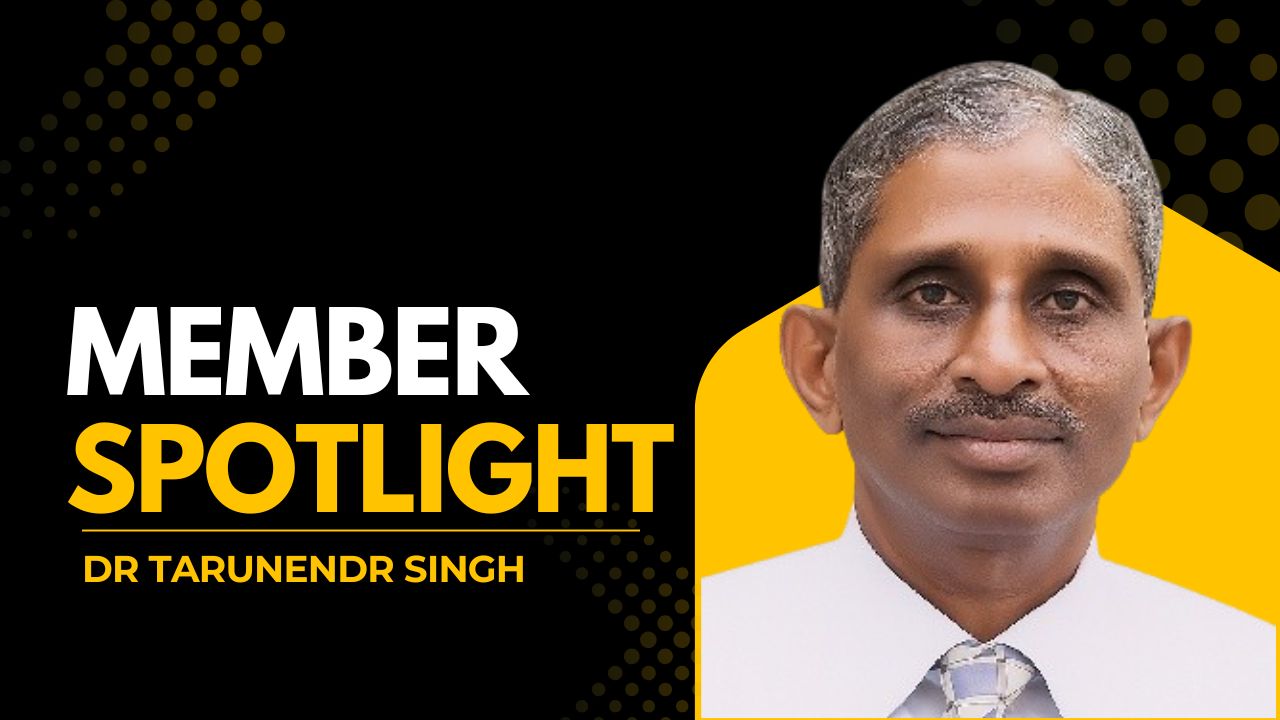
Grease, Growth & Global Standards: Dr. T Singh’s 35-Year Journey in Lubricants From pioneering formulations to shaping global standards
With over three decades of pioneering work in lubricants and tribology, Dr. T Singh has been at the forefront of innovation from developing high-performance greases for critical industries to shaping national and international standards. Dr. Singh combines deep technical expertise with a vision for sustainability and digital transformation. In this candid conversation, he reflects on his journey, the evolving role of lubricants in India’s growth story and his advice for companies looking to thrive in a changing industrial landscape. Localize your solutions- not just your products Can you share your professional journey and current role in the lubricants industry? I hold a Ph.D. in Extreme Pressure Lubricant Additives from IIT (BHU), Varanasi and an MBA in Marketing. My journey began in 1991 at Balmer Lawrie’s R&D Centre and since then I’ve worked with HPCL and BPCL across multiple R&D and leadership roles, ultimately serving as General Manager R&D, BPCL. Over the years, I’ve published over 100 papers, contributed to the development and commercialization of a wide range of greases and specialty lubricants and built strong expertise in product development, quality assurance and technical services. Currently, I am Director of Business Development at Siddharth Grease & Lubes Pvt. Ltd., where I lead technical service initiatives and ensure coordination between R&D and marketing teams. I also serve as Senior Vice President of NLGI India Chapter and Joint Secretary of the Tribology Society of India and have been honoured with both Lifetime Achievement and Long Service Awards from NLGI India. What inspired you to choose this field? After completing my postgraduate studies, I pursued my Ph.D. on extreme pressure lubricant additives at IIT BHU. This research naturally led me into the lubricants industry, where I have now amassed over 35 years of experience. The combination of chemistry, engineering and real-world applications continues to inspire me. What are some of your proudest milestones? As an R&D scientist, I’ve had the privilege of leading the development of high-performance greases for critical industrial applications – from sugar mill machinery to LPG conveyor systems and steel plant operations. These innovations not only met demanding performance benchmarks but also contributed to sustainability and energy efficiency. Currently, I also serve as Convener of the Grease Committee at BIS, where I lead the development of Indian grease standards and contribute to international specifications like ISO 2137. Receiving the 2024 NLGI Golden Grease Gun Award from NLGI USA has been another highlight of my career. How has the lubricants industry changed in the last decade? The industry has undergone a remarkable transformation. Lubricants are no longer just about protecting engines – they are now technology-driven, environmentally conscious and data-informed. Environmental regulations, consumer expectations and industrial innovation have all accelerated this change. Today, companies those invest in sustainability, digitalization and customer-centric solutions are defining the future of lubrication. In your view, what technologies and innovations will shape the next 5 years? I see a convergence of material science, digital tools and sustainability principles. Nanotechnology, advanced gels and bio-derived materials will change formulations. IoT and AI will make lubrication smarter with predictive monitoring. Circular systems, recycling and bio-based lubricants will become increasingly central. Across automotive, industrial and renewable energy sectors, the next wave of lubricants will combine performance with responsibility. “The winners in the next five years will be those who innovate sustainably, digitize smartly and build resilient supply chains.” How is sustainability influencing India’s lubricant practices? Sustainability is shaping the entire lifecycle from green formulations to digital usage tracking and from regulatory-backed recycling to circularity. Progress is visible, but true success will require stronger infrastructure, wider awareness and formalized collection systems. The biggest shift is the industry’s realization that sustainability is not optional, it’s now integral to competitiveness. What are the urgent key challenges for the industry to address? The lubricants industry faces a range of challenges that must be addressed to remain competitive, sustainable and technologically relevant -especially in emerging markets like India, as well as globally. The winners will be those who: Innovation with sustainability at the core. Smart digitalization without overcomplicating processes. Building resilient supply chains, especially given raw material shortage. Educating the market on responsible use and disposal of lubricants. Collaboration between policymakers, OEMs, manufacturers, recyclers and end-users is essential. How do you view India’s lubricant market growth in a global context? India is one of the fastest-growing lubricant markets in the world, driven by a rising automotive sector, infrastructure development, and Make-in-India policies. Nearly 60% of demand comes from automotive and construction, while industrial lubricants are expanding rapidly. Compared to global patterns, India’s growth is unique in its diversity of applications and its scale. Re-refined oils are becoming increasingly important as India moves towards circularity and extended producer responsibility (EPR). While collection infrastructure and quality control need strengthening, the potential is huge. Policies and industry initiatives are pushing for recycling and re-refined base oils are finding acceptance in industrial applications. Are bio-based or environmentally friendly lubricants viable at scale? Bio-based and environmentally friendly lubricants are gaining traction, especially in industries sensitive to environmental impact. While they are not yet fully viable as large-scale alternatives in every sector, the direction is clear. With improvements in performance, cost and availability, bio-based lubricants will become mainstream. The real shift will come when sustainability is not seen as an add-on but an integral part of product design and lifecycle. What challenges are clients bringing to you most often and how does this shape the industry’s skill needs? Clients today are asking about sustainability compliance, digitalization of lubrication practices and solutions for EVs and renewable energy applications. They want guidance not just on products but on systems and long-term efficiency. For professionals, this means that multidisciplinary skills are more critical than ever -combining tribology fundamentals with digital know-how, environmental awareness and supply chain understanding. The lubricant industry is no longer only about chemistry, it is about connecting science, technology and sustainability. How important are training, certification and collaboration in shaping the future? Training and certification are
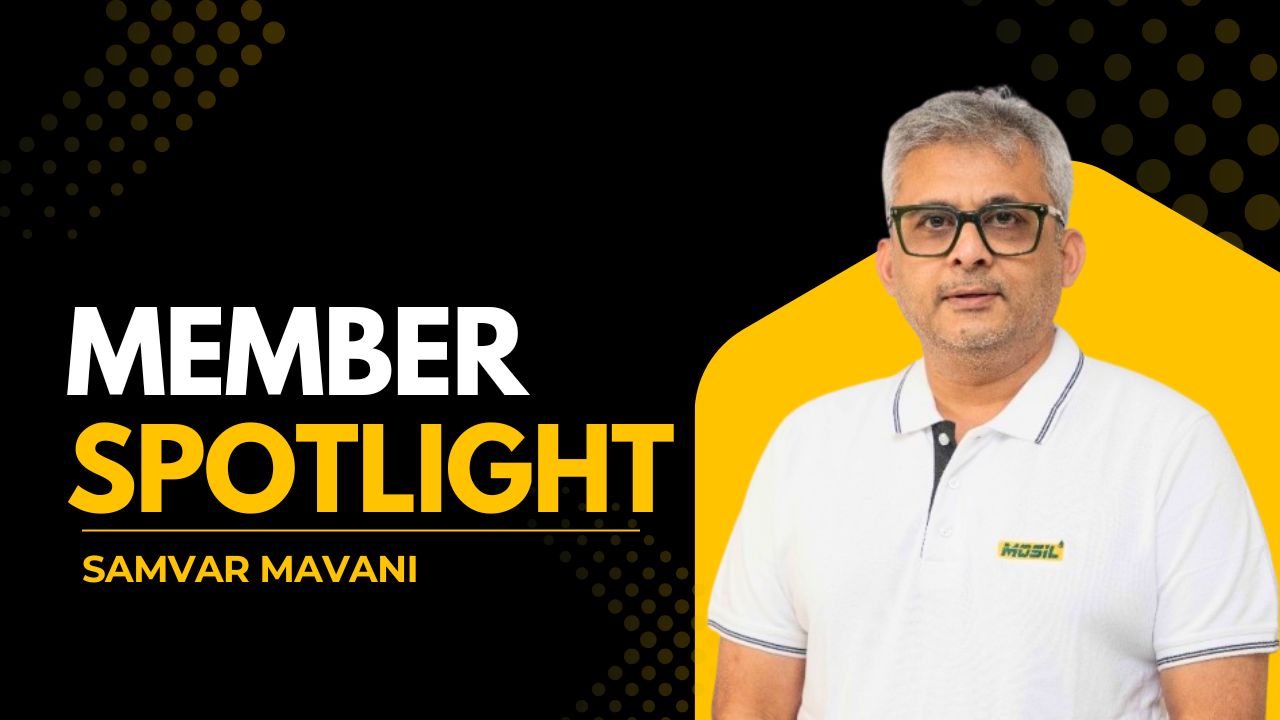
From Legacy Oils to Smart Greases: Samvar Mavani on Building World-Class Lubricant Solutions
With nearly three decades in the lubricants industry, Samvar Mavani has led the transformation of a family-run business into a professionally managed organization at the forefront of innovation. From pioneering synthetic oils in Indian cement plants to developing indigenous alternatives for critical steel applications, his journey reflects the power of R&D, resilience and visionary leadership. In this Spotlight interview, he shares insights on industry shifts, sustainability and what it takes to shape India’s lubricants future. Focus on creating long-term value rather than chasing short-term wins. Can you share your professional journey and what inspired you to enter the lubricants industry? I began my professional journey in 1996, shortly after completing my studies in instrumentation engineering and management. At that time, our company was a small, family-run business primarily serving the textile machinery sector. Over the years, we transformed it into a professionally managed organisation, steadily expanding into automotive, oil & gas and other industrial segments. My entry into the lubricants sector was more by inheritance than design, as I joined the family business soon after completing my studies. However, what began as a responsibility quickly turned into a passion. The industry is highly technical and application-driven, which meant I was constantly challenged to learn and adapt. Each customer requirement brought with it a unique problem to solve whether related to machinery performance, extreme operating conditions or sustainability concerns. What milestones stand out as turning points in your career? One of my proudest milestones came in 2006, when we secured our very first order for synthetic oil from a leading cement plant in North India. We supplied a 320 grade synthetic gear oil for a raw mill, replacing the mineral oil that had been in use. It was a breakthrough moment – not only because it marked our entry into synthetic lubricants on a large scale, but also because it gave us the confidence that an Indian manufacturer could successfully deliver solutions that had previously been dominated by international brands. More recently, I take pride in having developed an Indian alternative to a Japanese grease for a critical application in a steel plant. It was a technically demanding project and its success reaffirmed our ability to innovate and create world-class solutions from within India. Could you share some recent innovations or projects you’re particularly proud of? In recent years, I have been particularly proud of our work in developing high performance solutions that have (at times) surpassed the European or Japanese specialty products. A notable example is a grease we formulated as a replacement for a Japanese product used in a highly critical steel plant application. It required significant investment in R&D, extensive testing and close collaboration with the customer’s technical team. The success of this project not only strengthened customer confidence but also demonstrated that indigenous solutions can meet and even surpass demanding global benchmarks. We have also been working on advancing our testing capabilities by investing in rheometers, tribometers and custom-built rigs. These tools allow us to simulate real-world conditions and accelerate the development of high-performance lubricants. While these projects are less visible to the outside world, they form the backbone of our ability to innovate consistently. How has the lubricants industry evolved over the past decade? Over the past decade, the lubricants industry has shifted decisively towards high-performance and speciality products and I believe this trend will only accelerate. Customers are increasingly evaluating lubricants on the basis of total cost of ownership, which means that performance attributes such as extended drain intervals, energy efficiency and reliability will become even more critical. We are also seeing the gradual adoption of advanced grease thickener technologies such as calcium sulphonate complex and polyurea, which are likely to displace traditional lithium-based products in several demanding applications. Sustainability will play a much larger role in the years ahead – PFAS-free lubricants are already well established for exports to Europe and biodegradable formulations, though currently niche is poised to expand as regulations tighten and awareness grows. What emerging technologies will shape the next five years in lubricants, greases and industrial fluids? The next five years will be very exciting for our industry, as several emerging technologies begin to move from discussion to practical adoption. Nano-based lubricants and additives, for example, have long been spoken about but have not yet reached commercial scale. I believe we will start seeing meaningful progress here, with nano-additives helping to enhance load-carrying capacity, reduce friction and improve energy efficiency. Biodegradable and bio-based lubricants will also gain momentum. Although they will remain a relatively small share of the market initially, growing regulatory pressure and customer demand for sustainable solutions will accelerate their acceptance. Similarly, PFAS-free products, already becoming standard for European exports, will increasingly become the norm across industries. On the grease side, we can expect a stronger shift towards calcium sulphonate complex and polyurea thickeners, as industries look for higher performance and more robust alternatives to lithium. Alongside these product innovations, digitalisation will also play a key role – condition monitoring, predictive maintenance and smarter application tools will ensure lubricants are not just high-performing, but also used more intelligently. Sustainability in lubricants will be as much about educating people and improving practices as it will be about chemistry. How do you see sustainability influencing lubricants in India? Sustainability is beginning to influence the lubricants industry in India, but I believe its impact will become far more pronounced in the years ahead. In terms of formulation, we are already seeing a gradual move towards PFAS-free products and the early adoption of biodegradable and bio-based alternatives. While these remain niche today, increasing regulatory pressure and customer awareness will ensure they play a larger role going forward. Usage practices are also evolving. Customers are now placing greater emphasis on lubricants that extend drain intervals, reduce re-lubrication frequency and improve energy efficiency -all of which contribute to lowering the overall environmental footprint. Perhaps the biggest challenge however, lies in disposal. In India, used lubricants are often
Redefining Energy Governance: Key Takeaways from India’s PNG Rules 2025
India’s energy landscape is characterized by stark dependencies that underscore the urgency of regulatory reform. India has an 82.8% import dependence for crude oil and 45.3% for natural gas, creating significant vulnerability to global supply disruptions and price volatility. Against this backdrop, India’s crude oil production stood at 19.88 MMT during April-January 2025, representing a marginal contribution to the country’s massive energy requirements. The regulatory framework governing this critical sector had remained largely unchanged since independence, with the rules seeking to replace the outdated Petroleum Concession Rules, 1949 and Petroleum and Natural Gas Rules, 1959. This 76-year regulatory lag had created substantial inefficiencies in India’s upstream sector, necessitating comprehensive reform. Regulatory Architecture and Modernization The Draft Petroleum and Natural Gas Rules 2025 represent a fundamental shift from concession-based regulation to a more investment-oriented framework. The revised Model Revenue Sharing Contract (MRSC) reflects the new operational and fiscal realities of the sector, indicating a move toward more flexible commercial arrangements. Key analytical observations include: Structural Transformation: The rules consolidate multiple regulatory instruments into a unified framework, reducing compliance complexity and administrative overhead. This consolidation addresses a critical inefficiency where operators previously navigated multiple, often conflicting regulatory requirements. Investment Incentivization: The new framework incorporates specific provisions designed to attract both domestic and foreign investment, recognizing that India’s upstream sector requires substantial capital infusion to achieve production targets. Technology Integration: Modern technological standards are embedded within the regulatory framework, enabling operators to deploy advanced exploration and production technologies without regulatory impediments. Comparative Analysis:1949-1959 vs 2025 Framework The transformation from the legacy framework to the 2025 rules reveals significant philosophical and practical shifts: Scope Expansion: While the 1949 and 1959 rules focused primarily on concession allocation and basic operational requirements, the 2025 framework encompasses comprehensive lifecycle management, including environmental considerations, technology standards and international best practices. Commercial Flexibility: The legacy framework operated on rigid concession models with limited flexibility for changing market conditions. The 2025 rules introduce dynamic commercial arrangements that can adapt to evolving market realities. Regulatory Efficiency: The new framework emphasizes regulatory efficiency through streamlined approval processes, reduced bureaucratic layers and clearer timelines for regulatory decisions. The 2nd edition of Urja Varta 2025, India’s premier upstream oil and gas conclave, was held today at Bharat Mandapam, New Delhi. The most significant announcement at Urja Varta 2025 concerned India’s future investment trajectory. Minister Puri highlighted that India has invested over ₹4 lakh crore in energy infrastructure over the past decade and projected an investment of ₹30–35 lakh crore over the next ten years. This represents a 750-875% increase in investment intensity, indicating the government’s commitment to transforming India’s energy landscape. Sectoral Growth Projections Refining Capacity Expansion: Indian refining capacity has increased from 215.1 MMTPA to 256.8 MMTPA in last 10 years and is projected to increase to 309.5 MMTPA by the year 2028. This 20.5% projected increase in refining capacity by 2028 indicates significant downstream expansion that will require corresponding upstream development. Natural Gas Consumption Growth: Natural gas consumption is predicted to increase at a CAGR of 12.2%, from 174 MCMPD in 2021 to 550 MCMPD by 2030. This 216% increase in natural gas consumption over the decade creates substantial opportunities for domestic production enhancement. Engineering and Construction Services The projected investment of ₹30-35 lakh crore will have multiplicative effects on India’s engineering and construction sector. Historical analysis suggests that every rupee invested in upstream oil and gas typically generates 2.5-3 rupees in engineering and construction activity, implying a potential ₹75-105 lakh crore opportunity for the construction sector. Technology and Digital Services The emphasis on technology integration within the new regulatory framework is expected to drive substantial demand for digital oilfield services, advanced seismic technologies and data analytics capabilities. This could potentially create a domestic market worth ₹2-3 lakh crore over the next decade. Financial Services Impact The massive investment projections will require sophisticated financial instruments and risk management products. The banking and financial services sector is expected to develop specialized products for upstream oil and gas financing, potentially creating a new sub-sector within energy finance. Strategic Challenges and Opportunities With India’s current 82.8% crude oil import dependency, even modest improvements in domestic production could have significant economic impact. A 10% improvement in domestic production could reduce import bills by approximately $15-20 billion annually, based on current consumption patterns and crude oil prices. Technology Transfer and Skill Development The new regulatory framework’s emphasis on technology adoption creates opportunities for technology transfer and domestic skill development. The projected investment levels suggest potential employment generation of 2-3 million jobs across the value chain over the next decade. Environmental and Transition Considerations The rules must balance conventional hydrocarbon development with India’s net-zero commitments by 2070. The framework’s flexibility allows for integration of carbon capture and storage technologies, potentially positioning India as a leader in sustainable hydrocarbon development. Strategic Implications for India’s Energy Future The PNG Rules 2025 represent a inflection point in India’s energy policy, addressing decades of regulatory inertia while positioning the country for substantial upstream sector growth. The projected ₹30-35 lakh crore investment over the next decade, if realized could fundamentally transform India’s energy security profile and reduce import dependencies. The success of this regulatory transformation will depend on effective implementation, continued policy support and the ability to attract and deploy capital efficiently. The scale of projected investment suggests that India is positioning itself not just as a major energy consumer but as a significant player in global energy production and technology deployment. For industry stakeholders, the new framework offers unprecedented opportunities for growth and innovation while for policymakers, it provides a robust platform for achieving energy security objectives. The true test of these reforms will be their ability to translate regulatory modernization into tangible improvements in India’s energy security and economic competitiveness. Author is part of the team organizing Lubricant India Expo & Summit 2026, South Asia’s only specialized exhibition on Lubricants, Additives and base oils. Analysis based on official government announcements, industry data and regulatory documents as of July 2025. Investment
Re-Refined Marine Lubricants: A Path to decarbonizing South Asia’s Shipping Industry
As global momentum builds towards decarbonization, the shipping industry in the Indian subcontinent must prepare to align with the increasingly stringent environmental regulations set by international bodies. The International Maritime Organisation (IMO) and the European Union have both outlined aggressive carbon reduction targets including net-zero emissions by 2050. While maritime shipping is still one of the most carbon-efficient modes of transport (contributing just 3% of global CO₂ emissions), there’s significant pressure and opportunity to go further. Marine lubricants, specifically those made from re-refined base oils (RBOs), offer an impactful and often overlooked solution. Why South Asia Needs to Pay Attention India, Bangladesh, Sri Lanka and Pakistan are home to some of the busiest ports and critical maritime routes in the world. India alone handles over 95% of its trade by volume through maritime transport. With the region’s growing involvement in international shipping and its vulnerability to climate change, the stakes are high. Adopting greener practices, including re-refined lubricants could not only reduce emissions but also position South asia’s ports and ship operators as leaders in sustainable shipping. Re-refined Base oils: A Practical, Low-Carbon Option As explained by Tommi Jarvinen, Commercial Director at Avista Green, a leading Danish re-refiner, marine lubricants derived from re-refined base oils can cut CO₂ emissions by up to 85-90% compared to traditional virgin base oils. Just consider this: a single ocean-going vessel can use up to 2,000 liters of marine cylinder oil per day. Replacing this with RBO-derived oils can have a direct and measurable impact on a ship’s carbon footprint and shipping companies’ ESG performance. These oils are produced by recycling waste oils collected from previously-used lubricants – creating a closed-loop circular economy instead of the traditional linear model of “use and dispose.” Challenges in the South Asian Context Despite the environmental and economic advantages, perception remains a barrier. In many parts of India and South Asia, re-refined oils are still viewed as “inferior” or “black oils,”. This stigma persists even as global research and practical performance data prove otherwise. Another challenge is used oil collection infrastructure. According to Avista Green’s Vladimir Dhondt, more than 50% of used oil worldwide is not re-refined, largely due to collection inefficiencies. In India for example, the un-organized nature of the lubricant recycling sector leads to wastage, improper disposal and lost value. To truly adopt a circular model, companies across the supply chain -from lubricant blenders to shipping companies must collaborate to ensure waste oil is collected, returned, and re-used. The role of government policy and public-private partnerships will be critical here. Market Trends: Lessons from Europe for South Asia The global market saw a surge in demand for RBOs when Russian-origin base oils were removed due to sanctions. This led to a sharp spike in virgin oil prices showcasing the strategic value of local, circular oil supply chains. For South Asia, which heavily imports base oils, developing local re-refining capacity could shield the region from such price volatility and geopolitical risk. Conclusion: The Time is Now As South Asia continues to grow as a global shipping hub, it must take bold steps to future-proof its maritime sector. Investing in re-refined marine lubricants is not just good for the planet but it makes economic and strategic sense too. By shifting mindsets, improving collection systems and embracing circular practices, we can drive real progress in maritime sustainability. Let’s champion the circular economy for marine lubricants in South Asia. The oceans and our future depend on it. Author is the Director of the team organizing Lubricant India Expo & Summit 2026, South Asia’s only specialized exhibition on Lubricants, Additives and base oils. Lean more at www.lubricantindia.com.